


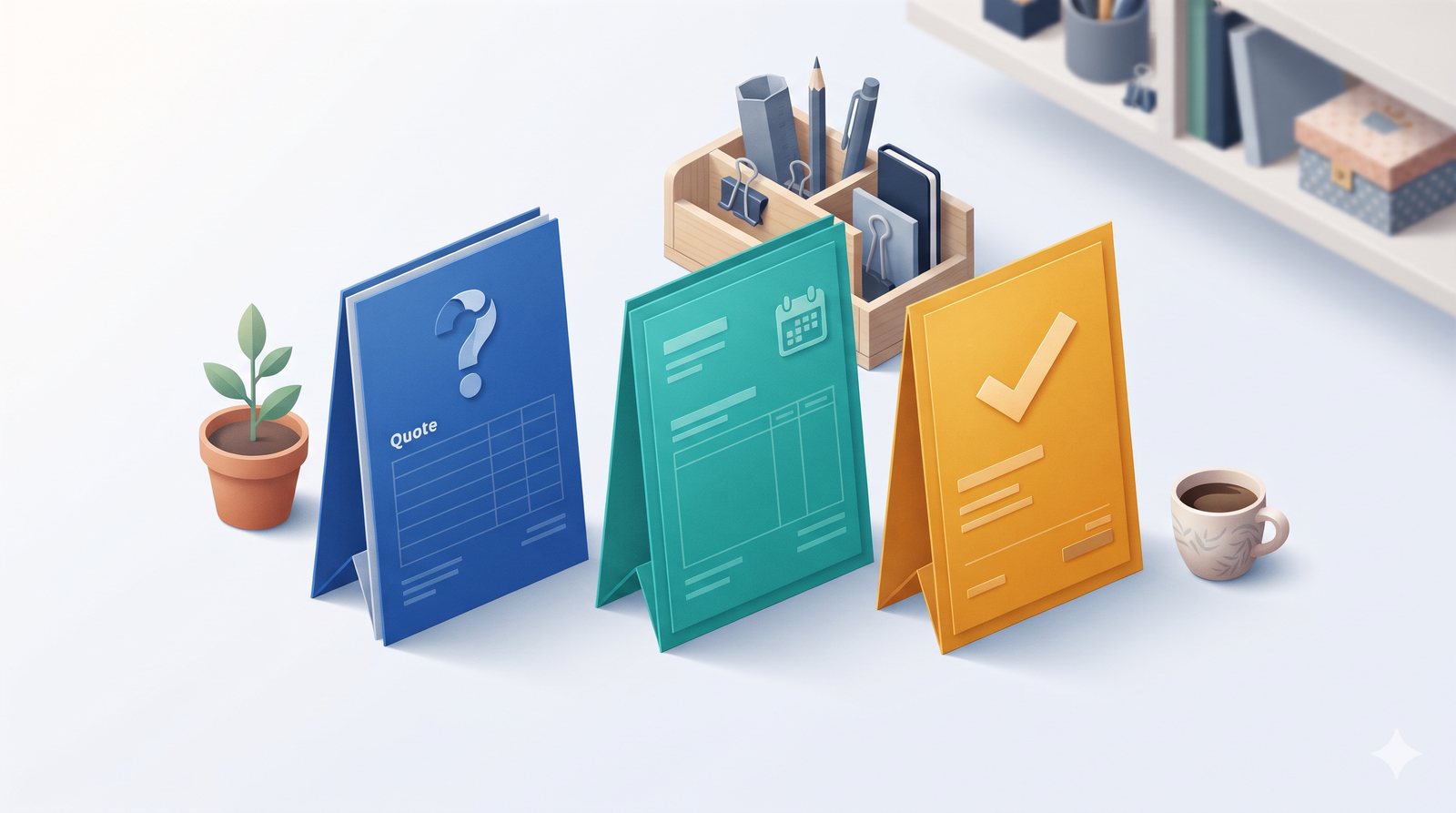
Many small businesses use the words quote, invoice and receipt as if they mean the same thing. A customer asks for "the bill" and gets a quote. Someone pays and gets another copy of the invoice instead of a receipt. Small mix-ups like these cause confusion, delays in payment and awkward questions later.
Each document has a different job. Once you are clear on the difference, your billing looks more professional and customers know exactly where they stand.
This post explains the basics in plain words. For tax rules, such as what a GST invoice must contain for your business, check with your accountant.
The quote: "this is what it will cost"
A quote, also called an estimate or quotation, is sent before the work or sale. It tells the customer what you will provide and at what price, so they can decide.
A quote usually includes:
- Your business name and contact details.
- Customer name and the date.
- A quote number, so you can refer to it later.
- What you will provide, described clearly.
- The price, and whether tax is included or extra.
- What is not included.
- Timeline and payment terms, such as the advance needed.
- A "valid until" date.
A quote does not ask for payment. It asks for a decision.
The invoice: "please pay this amount"
An invoice is sent after the customer agrees, usually when the work is done or the goods are delivered, or at agreed stages for longer jobs. It is a request for payment.
An invoice usually includes:
- The word "Invoice" clearly at the top.
- An invoice number, in sequence.
- Invoice date and due date.
- Your business details and the customer's details.
- Items or services, quantity, rate and amount.
- Tax details, if you are registered for tax.
- Total amount due, and any advance already received.
- How to pay: UPI ID, bank details or payment link.
The receipt: "thank you, we received it"
A receipt is given after payment. It confirms that you received the money. Customers need it for their records, and some businesses need it for their own accounts.
A receipt usually includes:
- The word "Receipt" at the top and a receipt number.
- Date of payment.
- Who paid and how much.
- How they paid: UPI, cash, card or bank transfer.
- Which invoice the payment was for.
- Any balance still pending.
In many shops, the bill given at the counter after payment works as both invoice and receipt. For service businesses that bill first and get paid later, they are usually separate.
Keep your numbering tidy
Each type of document should have its own number series, without gaps or repeats. For example, Q-001, Q-002 for quotes and INV-001, INV-002 for invoices. Tidy numbering makes it easy to find documents, match payments and answer customer questions. Your accountant will thank you too.
Link them together
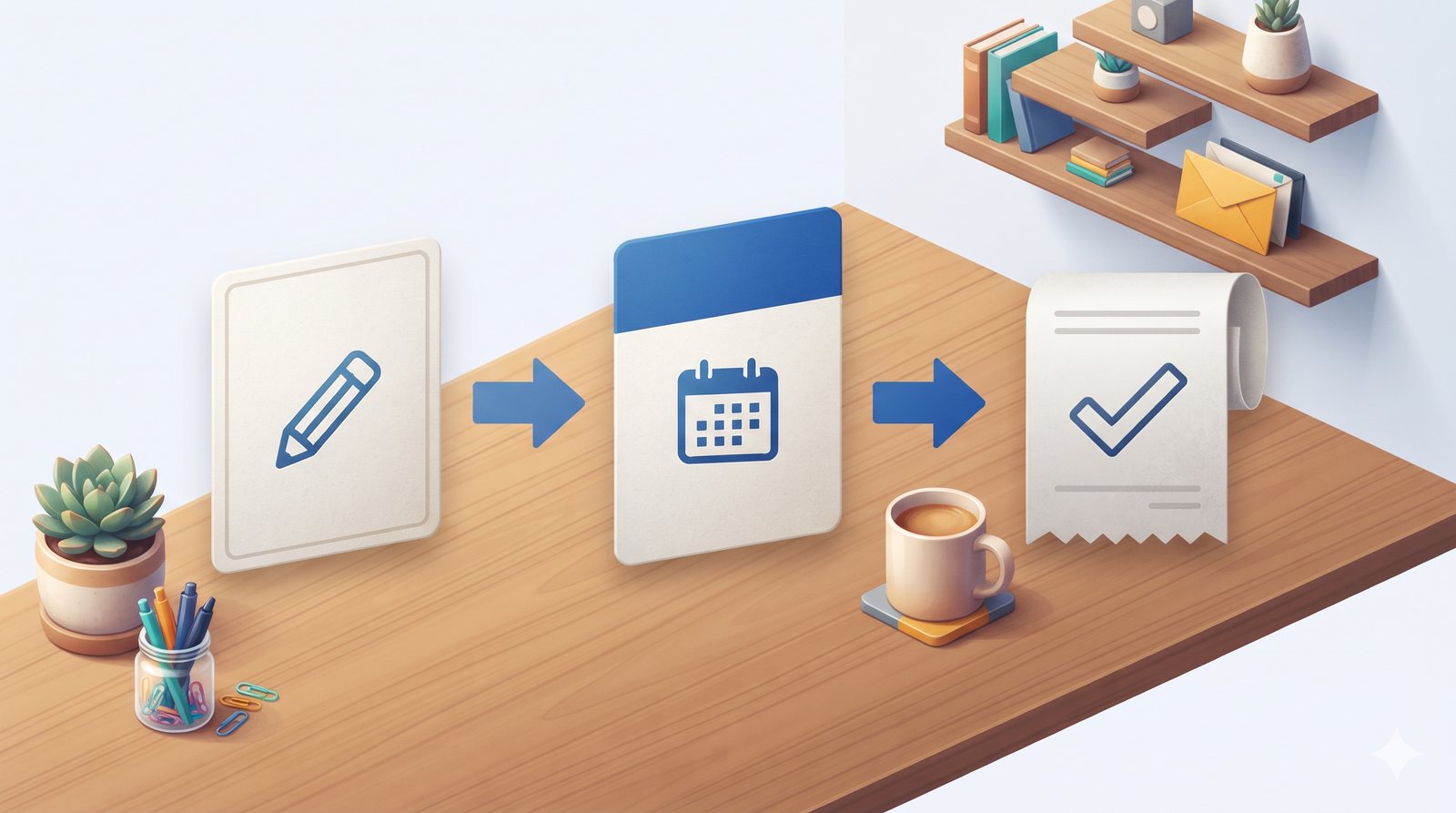
The three documents tell one story: what was offered, what was billed and what was paid. Referring to the quote number on the invoice, and the invoice number on the receipt, makes that story easy to follow if a question comes up months later.
Hello [CUSTOMER NAME], thank you for your payment of [AMOUNT] received on [DATE] by [PAYMENT METHOD] against invoice [INVOICE NO]. Your receipt is attached. Balance pending: [BALANCE]. Thank you for your business.
Common mistakes to avoid
- Sending an invoice without a due date, so the customer does not know when to pay.
- Changing prices between the quote and the invoice without explaining why.
- Forgetting to deduct an advance already paid.
- Not sending a receipt, so the customer is unsure whether payment reached you.
- Writing bills by hand with no copy kept.
Let software do the repetitive part
If you make these documents by hand or in a word processor, numbering and totals are easy to get wrong. Simple billing software keeps the number series in order, calculates totals and tax, turns an accepted quote into an invoice in one step, and creates a receipt when payment is marked. Each one can be shared on WhatsApp straight away.
Where to start
Fix your three templates this week using the lists above. If you would like quotes, invoices and receipts that link together and send themselves on WhatsApp, book a free 15-minute check and we will show you how it works.