


You send a quote. The customer says "thanks, I will check". Then you hear nothing.
It is easy to take this as a no. Often it is not. The customer got busy, the message sank under other chats, or they meant to reply and forgot. A gentle follow-up brings many of these back to life. The problem is that following up is easy to forget when you are running everything yourself.
A routine fixes that. Here is one you can start today.
The four steps
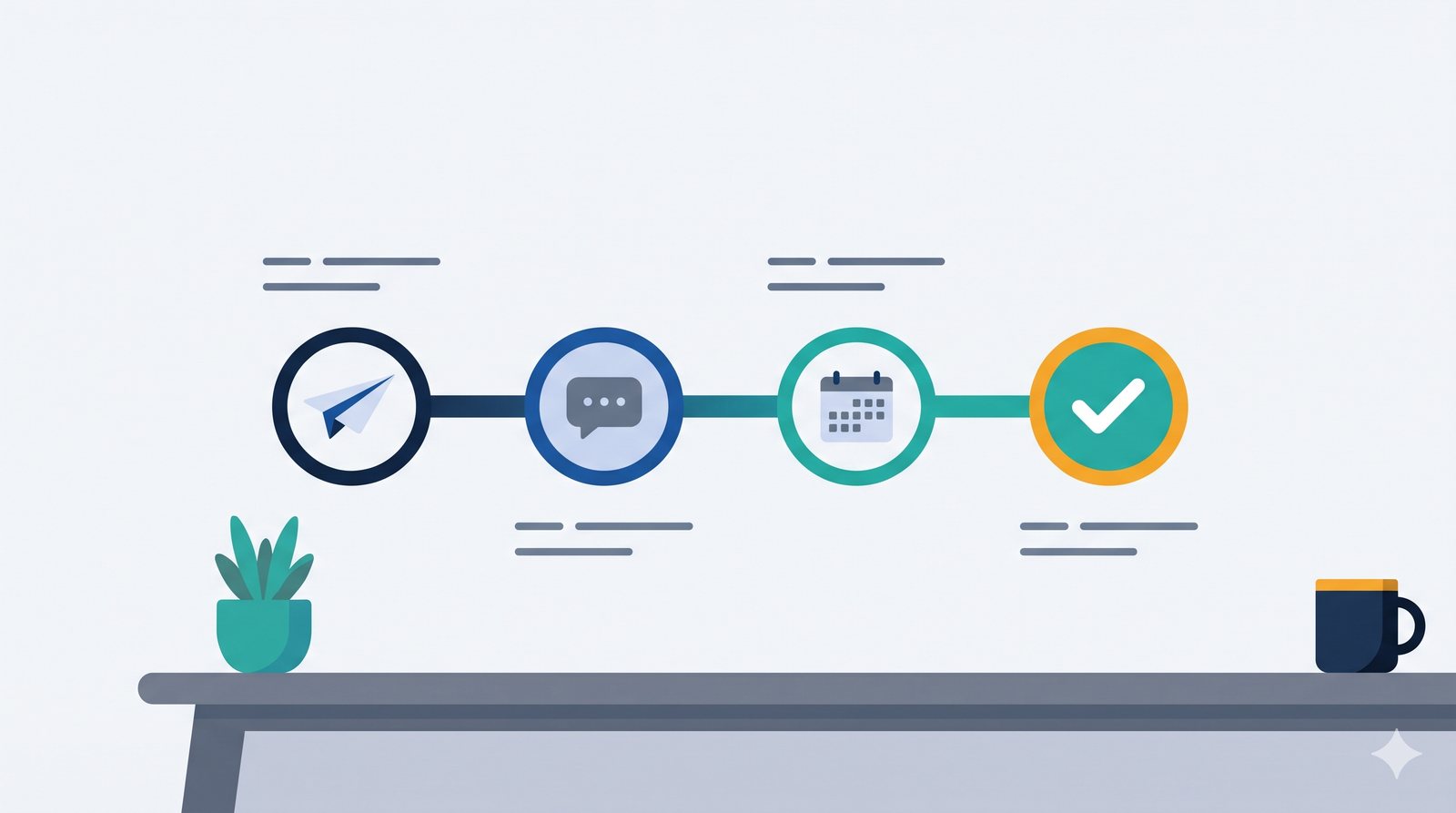
Same day: make the quote easy to say yes to
When you send the quote, say in one or two lines what it includes, what the total is, and what the next step is. A clear message is easier to answer than a long document.
Hello [CUSTOMER NAME], here is the quote for [SERVICE]: [AMOUNT], valid until [DATE]. If you would like to go ahead, just reply YES and I will confirm the date with you.
Day 2: a light check
Ask if they received it and offer to answer questions. Keep it short and friendly. No pressure.
Hello [CUSTOMER NAME], just checking that the quote reached you. Happy to answer any questions about it.
Day 5: add something useful
Give them a reason to reply that helps them, not you. Answer a question they are likely to have, mention an available date, or share a short example of similar work.
Hello [CUSTOMER NAME], a quick note: we still have slots on [DATE] if you would like to go ahead. Shall I hold one for you?
Day 10: close the loop politely
Say you will assume the timing is not right and leave the door open. This often gets a reply because it makes answering easy, and it lets you close the file with a clear mind.
Hello [CUSTOMER NAME], I will assume the timing is not right for now, and that is completely fine. If anything changes, message me here and I will be glad to help.
Three rules that make it work
- Give every message a clear next step. A yes or no question gets answered. "Let me know" does not.
- Stop when they answer. The routine is for silence. Once they reply, talk to them like a person.
- Write down the result. Won, lost, or waiting. After a month you will see which messages work and why customers say no.
How to track it
You need one place that shows who is waiting for a follow-up today. A simple sheet is enough to begin with. Make these columns:
- Customer name and phone number
- What the quote is for, and the amount
- Date sent
- Next follow-up date
- Status: waiting, won or lost
When the sheet gets heavy
A sheet works until you have dozens of open quotes and you forget to open it. A customer list with reminders does the remembering for you: it shows who to call today, and it can send the follow-up message at the right time. That is the idea behind the customer list and quote tools in our Growth plan, which has one flat monthly price whatever the size of your team.
Not sure which step to start with? Book a free 15-minute check and we will look at your own process together.