


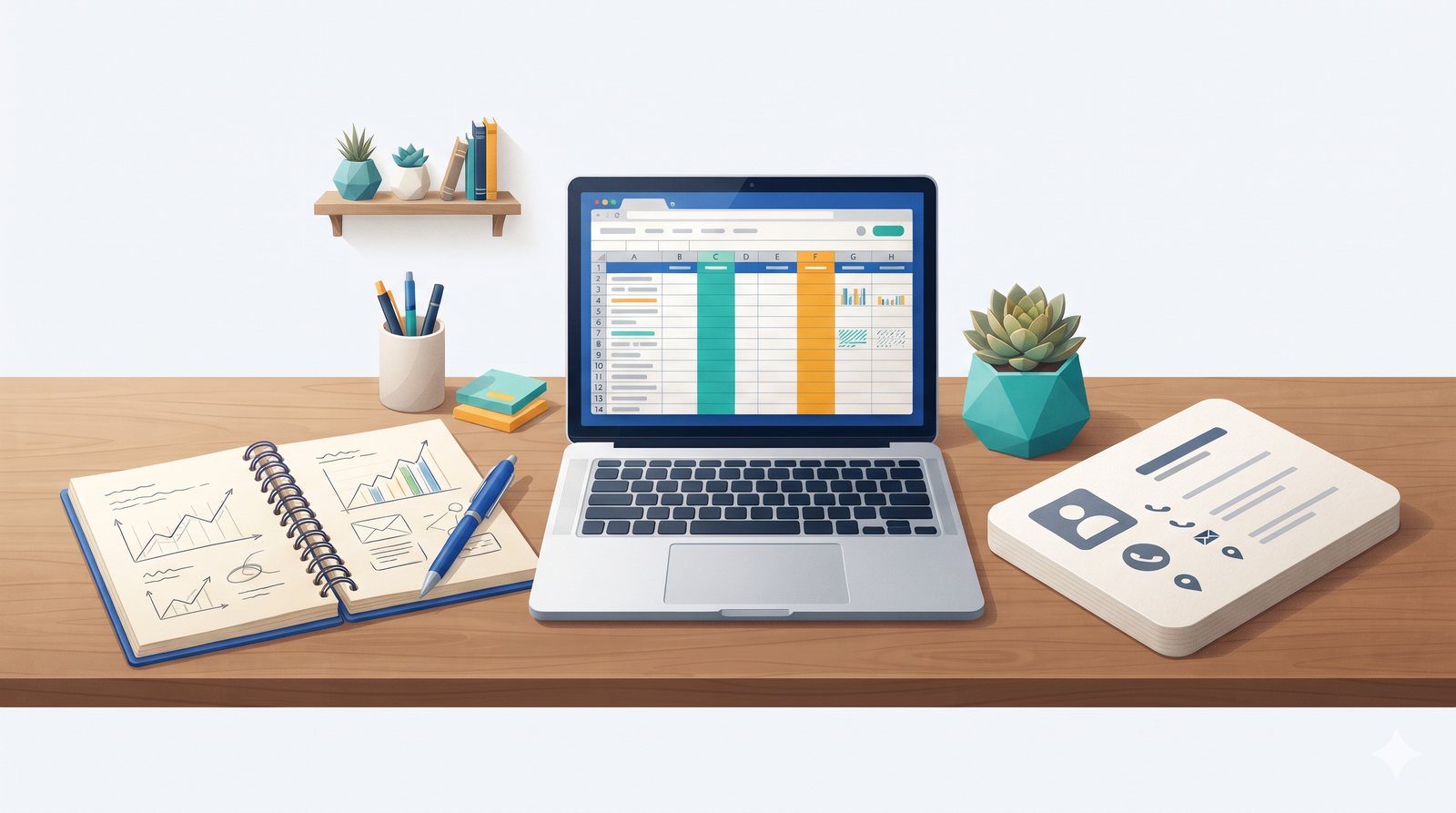
Every business keeps a customer list somewhere. For some it is a notebook by the counter. For others it is a spreadsheet that one person updates when they remember. And some have tried a CRM, the software that keeps customer details and follow-ups in one place.
None of these is wrong. The right choice depends on how many enquiries you get, how many people touch them, and how often something slips through. This post will help you decide without spending money you do not need to spend.
The notebook: fine for a small, steady flow
A notebook is quick, cheap and always on. If you get a handful of enquiries a week and you handle all of them yourself, it can work well.
The trouble starts when the notebook cannot answer a simple question. Who did we promise to call back this week? Which quotes are still waiting? When did this customer last buy? If you have to flip through twenty pages to answer, the notebook is costing you time.
- Good for: one person, low volume, mostly walk-in customers.
- Warning sign: you have missed a callback because it was on an old page.
The spreadsheet: a big step up, if someone keeps it tidy
A spreadsheet lets you sort, filter and search. You can see all open quotes in one view, or every customer from one area. It is free or nearly free, and most people already know the basics.
Spreadsheets work best when one person owns them and the columns stay the same. They struggle when three people edit the same file, when follow-up dates live in someone's head instead of a column, or when the list grows past a few hundred rows and nobody trusts it any more.
- Good for: a small team, a clear owner, a few dozen open enquiries at a time.
- Warning sign: there are two or three versions of the file and nobody is sure which is current.

A simple CRM: when follow-ups matter most
A CRM is a customer list with memory. It records who you spoke to, what they asked for, and when you should get back to them. The useful part is the reminder: it tells you who needs a call today, so nobody depends on memory.
You do not need a large, complicated system. For a small business, a good CRM does a few things well:
- One place for every enquiry, whether it came by WhatsApp, phone or walk-in.
- A status for each one, such as New, Quote sent, Won or Lost.
- A next follow-up date with a reminder.
- A short history, so anyone on the team can pick up the conversation.
- Good for: businesses where a missed follow-up means a lost sale, and teams of two or more.
- Warning sign: you regularly find out that a customer went elsewhere because nobody called back.
Five questions to help you decide
Answer these honestly. If you say yes to two or more, it is worth moving one step up from what you use today.
- Have you lost a sale in the last month because a follow-up was forgotten?
- Does more than one person reply to customers?
- Do you get more than about ten new enquiries a week?
- Do you spend time searching for a customer's details or past order?
- Would the business struggle if the person who keeps the list was away for a week?
How to switch without upsetting your routine
Whatever you choose, do not try to move everything at once. Start with the enquiries that are still open, because those are the ones that can still turn into money. Old, closed customers can be added later.
Agree on a few simple rules with your team, for example:
Every new enquiry goes into the list the same day with: name, phone number, what they asked for, and the next follow-up date. If there is no next date, the enquiry is marked Won or Lost.
That one rule does more than any software feature. A tool only helps if everyone uses it the same way.
What it costs to wait
Staying with a system you have outgrown rarely feels expensive, because the cost is hidden. It shows up as the customer who went quiet, the quote nobody chased, the repeat order that never came. For example, if one lost enquiry a week is worth ₹3,000 to you, that is about ₹12,000 a month walking away quietly.
Where to start
If a notebook still works for you, keep it, and add a column for the next follow-up date. If your spreadsheet has become messy, tidy it before buying anything. And if follow-ups are slipping every week, a simple CRM is worth a look.
If you are not sure which step fits, book a free 15-minute check. We will look at how enquiries reach you today and suggest the smallest change that would help, even if that change is just a better spreadsheet.